The Cost of Saving a Limb vs. the Lifetime Cost of Managing an Amputee: A 5-Year Actuarial Comparison
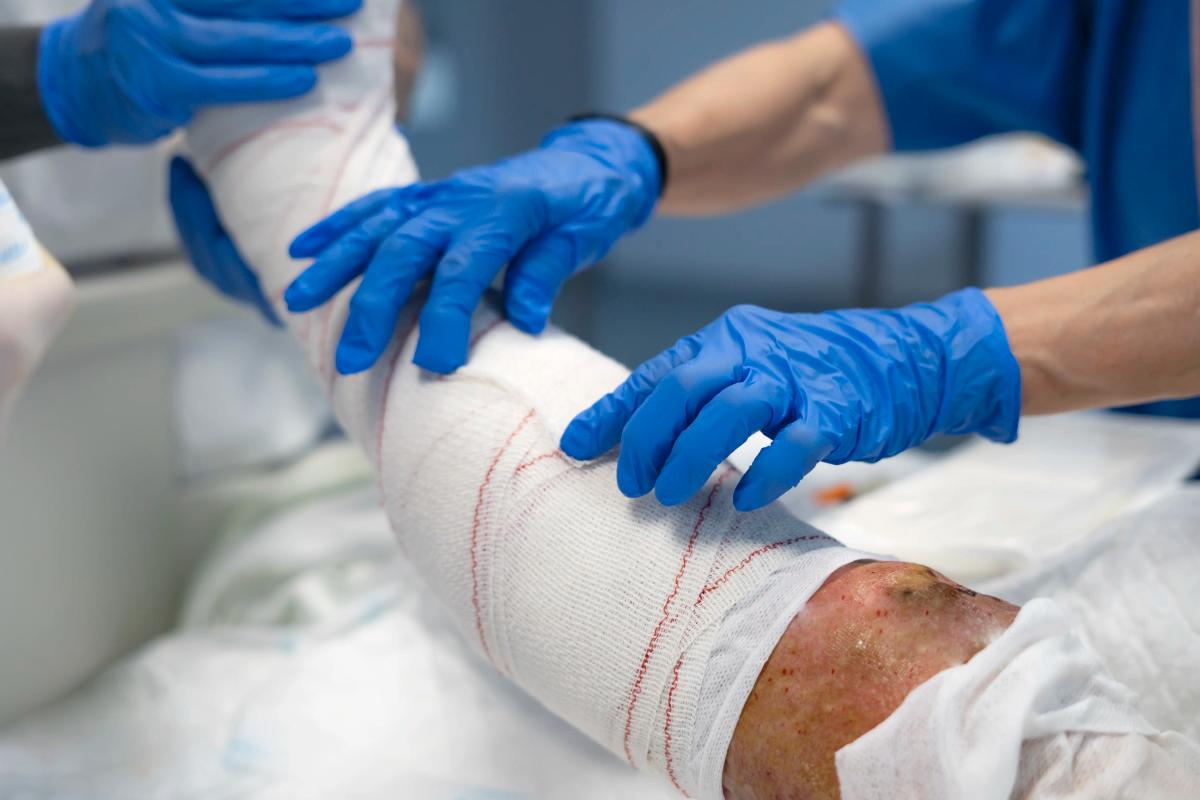
There's a number that never gets put in the same spreadsheet, even though it should be. It's the gap between what an organization spends on limb preservation and what they're forced to spend managing an amputation. One is an investment with a defined endpoint. The other is an annuity of expense that lasts until death. This is the financial case for limb preservation and why it's the decision that should be obvious once you see the full 5-year picture.
Year 1: The Amputation Event Itself
Let's start with the acute phase.
A lower extremity amputation isn't one cost. It's a cluster:
- Surgical time, anesthesia, imaging, hospitalization: $12,000-$18,000
- Below-knee amputation itself: $40,000-$60,000 (higher for above-knee)
- Immediate post-op hospitalization (5-7 days): $15,000-$25,000
- ER visits and complications during hospitalization: $3,000-$8,000
- Discharge to skilled nursing facility (average 14 days): $8,000-$14,000
Total acute cost, Year 1: $78,000-$125,000
(This aligns with the $125,000 first-year figure cited in our earlier article on amputation costs.)
Now layer on the prosthetics and rehabilitation:
- Initial prosthetic fitting and device: $10,000-$30,000 (can be much higher for complex cases)
- Physical therapy and occupational therapy (12-16 weeks): $8,000-$15,000
- Assistive devices (walker, crutches, home modifications): $3,000-$8,000
Total prosthetics and rehab, Year 1: $21,000-$53,000
Year 1 total: $99,000-$178,000
Take the midpoint: approximately $140,000 in Year 1.
Years 2-5: The Persistent Cost Tail
Year 1 isn't the end. It's the beginning of a permanent cost structure.
An amputee requires ongoing management:
- Annual prosthetic replacements or repairs (lifespan: 3-7 years): $3,000-$8,000/year
- Ongoing physical therapy and mobility services: $2,000-$5,000/year
- Wound care for residual limb (phantom pain, neuroma pain, skin breakdown): $1,500-$4,000/year
- Primary care visits more frequent due to immobility and comorbidity: +$2,000-$4,000/year vs. baseline
- Diabetes management intensified (higher A1C rates, more complications): +$3,000-$5,000/year
Annual ongoing cost, Years 2-5: $11,500-$26,000/year
But that's just routine maintenance. Now layer in the complication cascade:
Depression and functional decline: 30% of amputees develop depression severe enough to require treatment. Depression drives ER visits, hospitalizations, and medication use. Cost to manage: $3,000-$8,000/year for affected patients.
Contralateral limb loss: The risk of amputation in the other leg is 8.4-11.5% within 5 years post-first amputation. If you're calculating expected value, you need to account for this risk: additional $10,000-$25,000 in cost (for subsequent amputation management) × 9% probability = $900-$2,250/year expected cost.
Cardiovascular complications: Amputees have higher rates of MI and stroke, partly due to immobility, partly due to underlying vascular disease that led to the amputation in the first place. Hospitalization for cardiac complications: $15,000-$40,000. If this affects 5% of amputees per year: $750-$2,000/year expected cost.
Renal progression: Many diabetic amputees have concurrent kidney disease. Immobility accelerates decline. 10% of amputees transition to dialysis within 5 years. Dialysis cost: $90,000-$120,000/year. At 10% probability, that's an expected $9,000-$12,000/year.
Years 2-5 adjusted annual cost: $22,000-$48,000/year
Over 4 years: $88,000-$192,000
Total 5-year cost for amputation pathway: $228,000-$370,000
Conservative midpoint: $300,000 for the amputation pathway over 5 years.
The Limb Preservation Pathway
Now the flip side.
A patient is identified with a DFU or another limb-threatening condition in the acute phase. Specialized wound care is initiated:
Months 1-3 (Active stabilization phase):
- Weekly home-based wound care: 12 visits × $450 = $5,400
- Vascular imaging and specialist consult: $3,500-$6,000
- Possible revascularization (if indicated): $8,000-$15,000
- Coordinated nutrition, podiatry, endocrinology: $2,000-$4,000
Phase 1 cost: $18,900-$30,400
Months 4-9 (Maintenance and healing phase):
- Bi-weekly wound care visits: 12 visits × $350 = $4,200
- Ongoing specialist management as needed: $2,000-$4,000
- Supply costs and equipment: $1,500-$2,500
Phase 2 cost: $7,700-$10,700
Months 10-12 (Resolution and reintegration):
- Monthly visits as wound approaches closure: 3 visits × $300 = $900
- Final imaging or studies: $1,000-$2,000
Phase 3 cost: $1,900-$2,900
Year 1 total for limb preservation: $28,500-$44,000
Let's call it $36,000 midpoint.
Years 2-5: Maintenance and Prevention
Now the patient has a healed (or healing-managed) diabetic foot ulcer, and the focus shifts to prevention and maintenance:
- Quarterly preventive foot care visits: 4 visits/year × $250 = $1,000/year
- Annual endocrinology and vascular reassessment: $1,500/year
- Podiatry and orthotic management: $1,000-$2,000/year
- Diabetes optimization and medication management: $3,000-$5,000/year (similar to population baseline with intensive diabetes management)
Annual cost, Years 2-5: $6,500-$9,000/year
Over 4 years: $26,000-$36,000
Total 5-year cost for limb preservation: $62,000-$80,000
Conservative estimate: $71,000 for the limb preservation pathway over 5 years.
The Actuarial Gap
Amputation pathway, 5 years: $300,000
Limb preservation pathway, 5 years: $71,000
Difference: $229,000
You're spending $300K managing the consequences of amputation, or $71K preventing it. The ROI on limb preservation is 4:1, even before accounting for the quality-of-life and mortality differential.
And that's not even accounting for the fact that amputation's cost structure extends well beyond 5 years. The prosthetic replacements, the dialysis, the cardiac complications—those continue. We're just stopping at the 5-year horizon because that's when an MA plan's financial accountability usually ends.
But for the patient, the cost tail extends to death.
The Hidden Costs of Amputation
These numbers don't show up neatly in claims data, but they're real:
Disability claims and lost productivity: An amputee older than 65 often becomes homebound. If they're under 65, they often transition to disability. The societal cost of that lost productivity, compounded over 5-10 years, is substantial. For employers, it's tens of thousands per employee.
Mortality acceleration: A 65-year-old with a new amputation has a 45-50% 5-year mortality rate. That's not because of the amputation itself—it's because amputation signals advanced vascular disease, uncontrolled diabetes, and severe comorbidity. The point: you're not just managing an amputee. You're managing someone whose lifespan is already compressed. All subsequent care happens in a shorter window, which means more intensive, more expensive care.
Caregiver burden: An amputee requires significantly more assistance with ADLs. If that's a family caregiver, there's lost income, lost productivity, and often accelerated decline in the caregiver's own health due to stress. If it's paid care, you're adding $3,000-$6,000/month for in-home support.
The Comparison That Never Happens
Here's the structural problem: In most organizations, the limb preservation investment is captured in one budget (wound care, specialty services). The amputation cost is spread across multiple budgets (inpatient, skilled nursing, prosthetics, pharmacy, dialysis, disability, etc.).
It's easy to see the wound care cost as a line item. It's impossible to see the amputation cost as a unified number, even though it's much larger.
This is why actuarial teams exist. To make the comparison that operating departments naturally avoid.
And when you do that comparison, the answer is unavoidable: If you're going to spend money on a patient with advanced diabetic disease and limb threat, the highest-ROI spend is limb preservation, not amputation management.
Share your thoughts and help others learn from your experience
Ready to Learn More?
Explore our comprehensive resource center for more insights on advanced wound care and healing.